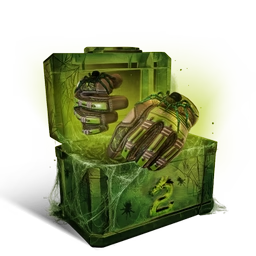
The phenomenon of case opening has transformed from a niche gaming mechanic into a massive digital subculture. Whether players are hunting for ultra-rare virtual knives in tactical shooters, collecting digital trading cards, or unboxing mystery rewards in RPGs, the thrill of the virtual draw captivates millions.
While the concept appears straightforward—pay a fee, open a container, receive a prize—the underlying mechanics involve probability theory, psychology, and complex digital economies. This comprehensive guide explores the mechanics of case opening, evaluates the odds, examines the economic impact, and provides strategic insights for enthusiasts.
What is Case Opening?
Case opening refers to a mechanic found in many modern video games and digital platforms where users acquire a locked virtual container (a “case,” “crate,” or “box”) and a matching key. By using the key, the container is unlocked via a randomized animation, revealing a single virtual item from a predetermined pool of possibilities.
Originally popularized by Valve’s Counter-Strike: Global Offensive (now CS2), the mechanic has since spread across the gaming landscape. Items acquired through these drops typically range from common, low-value cosmetics to ultra-rare, highly coveted collector’s items that can command thousands of dollars on secondary markets.
The Anatomy of a Case: Rarity Tiers
Every case operates on a strict hierarchy of item rarity. Developers design these tiers to ensure that common items appear frequently, while prestigious items remain exceptionally scarce.
To better understand how items are categorized, consider the standard industry rarity breakdown:
| Rarity Tier | Approximate Drop Rate | Market Value Impact |
|---|---|---|
| Consumer / Common | ~79.92% | Very Low (Bulk / Salvage) |
| Industrial / Uncommon | ~15.98% | Low (Standard Play) |
| Mil-Spec / Rare | ~3.20% | Moderate |
| Restricted / Mythical | ~0.64% | High |
| Classified / Legendary | ~0.13% | Very High |
| Covert / Ancient | ~0.26% | Premium Collectible |
| Special / Exceedingly Rare | ~0.26% | Investment Grade (Knives/Gloves) |
Note: While exact percentages vary by platform and game title, the mathematical principle of exponential scarcity remains consistent across the industry.
The Psychology Behind the Spin
Why is case opening so compelling? The answer lies in behavioral psychology. Game developers and platform operators utilize principles similar to those found in traditional slot machines and casinos.
- Variable Ratio Reinforcement: Because rewards are unpredictable, the brain releases higher levels of dopamine anticipating a win. This is the exact mechanism that makes games of chance so engaging.
- Near-Miss Effect: Witnessing the animation slow down and stop just short of a rare item triggers a psychological response that encourages the user to try again, falsely signaling that they were “close” to winning.
- Sunk Cost Fallacy: After spending a specific amount of money without a significant return, participants often continue opening cases in an attempt to “win back” their losses.
Strategic Approaches to Case Opening
While case opening is ultimately a game of chance governed by Random Number Generators (RNG), participants often adopt specific strategies to manage their budgets and expectations.
1. Set a Strict Budget
The most crucial rule of engaging with randomized drops is treating the cost as entertainment expenditure rather than an investment strategy. Establishing a strict financial limit before starting prevents impulsive spending.
2. Understand Expected Value (EV)
Mathematically, the Expected Value of opening a case is almost always lower than the cost of the key and the case combined. Because the house or platform maintains an edge, long-term unboxing statistically results in a net loss of value.
3. Direct Purchase vs. Opening
For collectors who have their eyes on a specific item, relying on case opening is statistically inefficient.
- Case Opening: High variance, low probability of getting a specific item.
- Direct Marketplace Purchase: Fixed cost, zero risk of receiving an unwanted item.
The Economics of Virtual Items
The sustainability of case opening relies heavily on peer-to-peer marketplaces. When users unbox items they do not want, they often sell or trade them. This creates a thriving ecosystem where supply and demand dictate prices.
- Liquidity: High-tier items function similarly to digital art or cryptocurrency, boasting high liquidity and global demand.
- Inflation Control: Mechanisms like trade-up contracts (trading ten items of one tier for one item of the next higher tier) help remove excess common items from the ecosystem, stabilizing supply.
Frequently Asked Questions (FAQ)
Are case openings rigged?
Generally, no. Regulated platforms utilize certified Random Number Generators (RNG) to ensure drop rates are genuinely random and align with publicly stated probabilities. However, the odds heavily favor the platform.
Can you make a profit from case opening?
While individual users can occasionally pull a rare item worth more than the cost of the key, doing so consistently is statistically improbable. Over a large sample size, the house edge ensures overall financial loss.
What happens to unwanted items?
Most platforms allow users to sell unwanted items on a community marketplace, trade them with other users, or recycle/trade them up for higher-tier items within the game’s ecosystem.
Is case opening considered gambling?
The legal classification varies by jurisdiction. Because virtual items often hold real-world monetary value via third-party marketplaces, some countries regulate or outright ban loot boxes and case opening mechanics, classifying them as a form of online gambling.
Case opening remains a polarizing yet immensely popular feature in modern digital entertainment. By understanding the underlying odds, recognizing the psychological triggers at play, and maintaining strict financial boundaries, enthusiasts can approach the mechanic safely as a form of entertainment rather than a reliable financial strategy. Whether you choose to open cases for the thrill of the reveal or bypass the RNG entirely in favor of direct marketplace purchases, knowledge remains your best tool in the digital economy.
CS2Skin makes CS2 Case simple and engaging—open virtual CS2 cases, explore skin outcomes, and enjoy clear, exciting results.